Trump's Telegraph: When Geopolitical Rhetoric Becomes a Market Lever
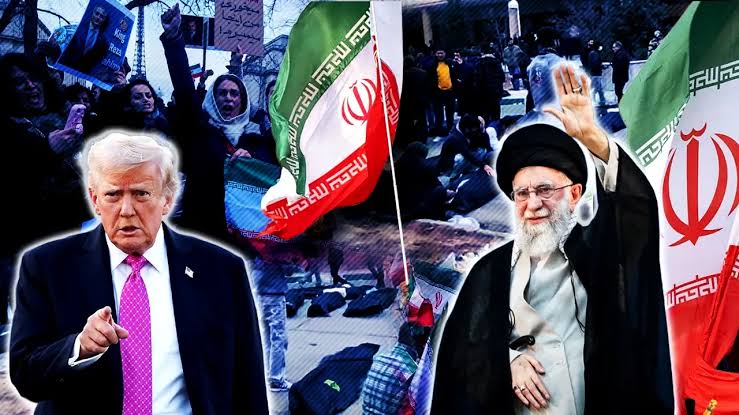
The global financial apparatus, typically responsive to underlying fundamentals and clear policy signals, has found itself repeatedly caught in the turbulent wake of a singular, unpredictable phenomenon: the 'Trump rollercoaster.' This isn't just about market volatility; it's about a distinct pattern where a President’s public pronouncements, regardless of their contradictory nature, generate swift, tangible shifts in commodity and equity values, seemingly by design.
Only hours after a dire warning that Iran was about to be struck “VERY HARD” — a threat that predictably sent oil prices soaring and stocks tumbling — Donald Trump announced the US and Iran were on the verge of a peace agreement. The market responded with immediate, obedient precision: oil prices dropped, and the stock market rebounded. This rhythmic whiplash, as if choreographed, has been observed before. The source points out this marks the 39th occasion the president has declared US-Iranian talks on the cusp of fruition, often after walking back threats of “mass devastation” or the destruction of “critical civilian infrastructure,” actions that verge on war crimes if intentional.

This pattern has illuminated a peculiar arbitrage opportunity. While traders are kept “on edge,” and “most of the world” is made poorer by the constant uncertainty, a specific cohort consistently benefits. A BBC investigation uncovered multimillion-dollar trades in global markets executed just before major administration announcements, particularly involving oil futures. This suggests that presidential rhetoric, despite its apparent chaos, functions as a highly effective, if ethically questionable, market signal. Threats, such as the repeated vow to seize the island of Kharg, a focal point of Iran’s hydrocarbon industry, or the actual bombing damaging a critical reservoir and water tanks in drought-stricken areas, morph from geopolitical maneuvers into catalysts for financial gain, especially when followed by sudden de-escalations, like the unilateral cancellation of strikes declared on Truth Social.
The economic implications of such a dynamic extend far beyond the immediate gains of those with “advance knowledge.” It exposes a vulnerability in the global financial system, where the sheer volume and contradictory nature of high-level political communication can be weaponized. The markets, like a “trained seal,” continue to bob up and down, responding to every hint and retraction, making it a guaranteed response. Iran’s foreign ministry might be less definite about a proposed agreement being studied by “decision-making bodies,” but the oil price still reacts, falling below $90 (£67) a barrel regardless of Tehran’s official stance. This environment signals not just instability but a potential shift in how geopolitical events are engineered, less for diplomatic outcomes and more for their immediate, lucrative market impacts. It transforms international relations into a performance with direct, financially measurable consequences, where the 'management' consistently profits from the volatility.