The Trillion-Dollar Paradox: Musk's Paper Crown and the Price of Unilateral Power
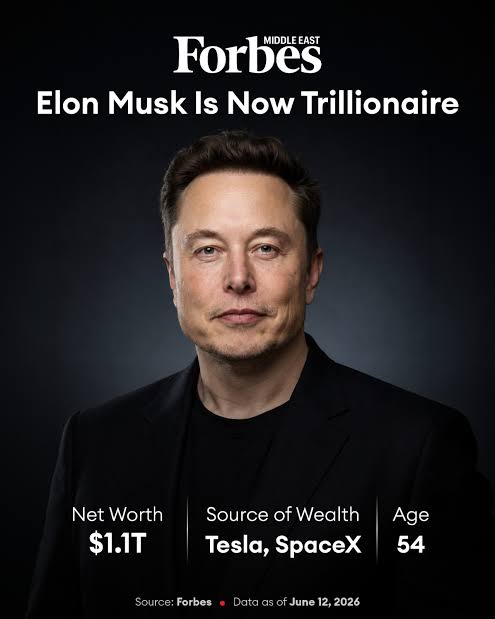
Elon Musk's recent ascension to the status of the world's first trillionaire, propelled by the spectacular stock market debut of his SpaceX rocket company, is more than just a financial milestone. It is a stark reflection of concentrated capital, unchecked influence, and the global friction it generates, immediately sparking intense debate about wealth inequality.
On Friday, SpaceX, described as a rocket, telecommunications, and artificial intelligence (AI) company, listed on the Nasdaq stock exchange with an astounding valuation of $2.2 trillion. Shares, initially offered at $135 each, opened trading at $150 and briefly soared to $176.50, demonstrating significant investor enthusiasm. This initial public offering (IPO) alone raised $75 billion from investors and underwriters. For Musk, this translated into a total net worth of $1.11 trillion (£828 billion), according to the Bloomberg rich list, cementing his position as the world's wealthiest individual.

Yet, this unprecedented wealth, with Musk's SpaceX shares alone valued at $767.1 billion and a further $168 billion in Tesla shares, exists largely on paper. The source explicitly states that Musk is a "trillionaire only on paper," his fortune intrinsically tied to stockholdings, with a one-year lock-up period on selling SpaceX stock. This nuance underscores a market driven by optimism about "potential future earning" rather than immediate, liquid assets. This dynamic, while creating over 4,400 new millionaires among current and former SpaceX staff through share allocations, simultaneously amplifies the discussion around wealth concentration.
Musk's 42% ownership stake in SpaceX is particularly critical, granting him "unilateral control over everything it does" and the discretion to "spend the money being invested however he likes." This level of control is not merely financial but translates directly into profound political and societal influence. His wealth, now comparable to the entire economic output of nations like Poland or Switzerland, has already made him a "powerful and divisive figure in global politics."
The tangible implications of such concentrated power are evident in Musk's reported actions: giving "hundreds of millions of dollars to the re-election campaign of US President Donald Trump" and, for "several months last year," leading the Department for Government Efficiency (Doge). During his tenure at Doge, Musk was reportedly "responsible for the closure of the US Agency for International Development (USAID) through drastic cuts to government spending." The Lancet medical journal published a stark warning that such cuts "could cause more than 14 million additional deaths by 2030," highlighting the profound human cost potentially tied to private influence on public policy. Furthermore, his public criticisms of leadership in the UK and elsewhere, touching on topics like immigration and promoting racial divisions, and clashes with figures like UK Prime Minister Sir Keir Starmer over the murder of an 18-year-old British student, further illustrate the reach of his influence.
This phenomenon of a single individual accumulating wealth on a scale previously unimaginable naturally draws political condemnation. Democratic US senators Bernie Sanders and Elizabeth Warren have publicly condemned the milestone, with Warren characterising it as a "wake up call" and advocating for wealth taxes. Their calls underscore a growing global debate regarding the equitable distribution of capital and the societal responsibilities that accompany extreme wealth.
The trillion-dollar valuation of Elon Musk is a complex narrative. It celebrates technological innovation and market confidence in ventures like space exploration and AI. Simultaneously, it serves as a stark reminder of the escalating wealth divide, the immense political leverage that comes with it, and the urgent questions it poses for economic policy and democratic governance worldwide.