The Spartanburg Paradox: How US Capital Defies Global Headwinds
In a world increasingly accustomed to economic volatility, the sustained vigor of the American economy has become a subject of considerable debate among economists. While much of the developed world has contended with a succession of global shocks – from disruptive trade tariffs and shifts in labor markets due to mass deportations to the lurching oil prices sparked by Middle East conflict – the US has consistently navigated these turbulences with unexpected resilience. The contrast is stark, exemplified by BMW's sprawling operations in Spartanburg, South Carolina, standing in sharp relief against the shuttered Volkswagen "Transparent Factory" in Dresden, Germany.
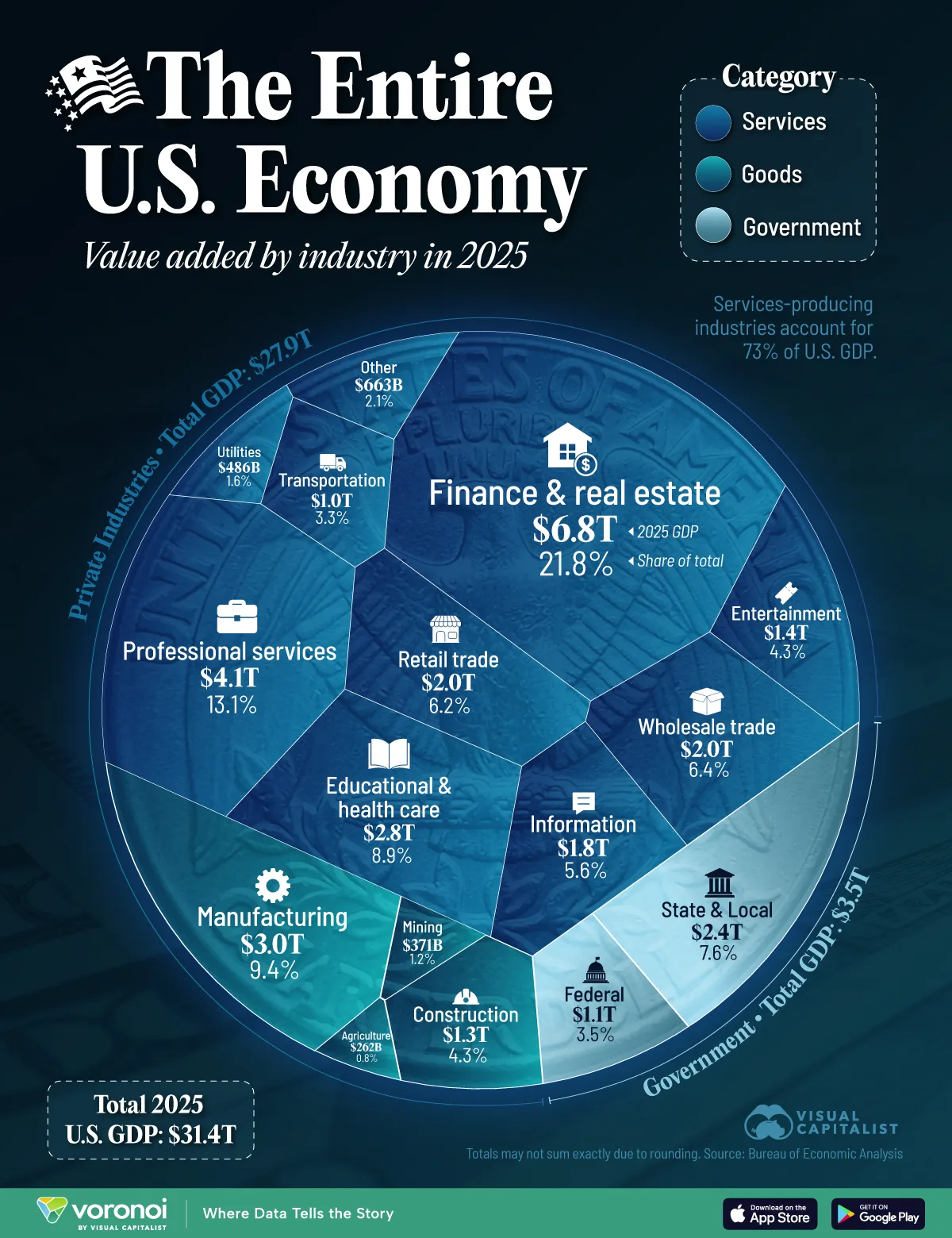
The economic puzzle revolves around why the US economy has continued to outperform its peers despite confronting shared global challenges. Many observers anticipated these pressures would significantly weigh on US growth, fearing a scenario of weak growth coupled with persistently rising prices. However, this combination has largely been averted, with the economy maintaining an annualised growth rate of approximately 2%. Joe Brusuelas, chief economist at RSM, posits that the very "own goals" of the Trump administration, particularly in trade and immigration, inadvertently became a testament to the inherent dynamism of the American economic model.
**Capital Investment as a Countermeasure**
Faced with sudden taxes on foreign components, US corporations did not simply absorb lower margins. Instead, they responded with increased investment. Brusuelas highlights that capital expenditure (CapEx) currently stands at 13.9% of US GDP, a figure that, contrary to economic expectations given prevailing supply and demand shocks, shows no signs of slowing. This aggressive investment strategy, coupled with a notable rise in productivity, has allowed the economy to expand even amidst disruptions.
**Shale Revolution and Energy Independence**
Another crucial factor in America's economic fortitude is its transformed energy landscape. Historically, escalating oil prices due to geopolitical tensions, such as the conflict in the Middle East, would pose a significant threat to US growth. However, the shale revolution, driven by fracking developments since the early 2000s, has fundamentally altered this dynamic. The US has emerged as one of the world's largest oil and gas producers, while businesses have concurrently reduced their reliance on petroleum. Brusuelas notes that oil's contribution to GDP per unit has fallen by half over the past five decades, significantly insulating the economy from energy price volatility.
**Flexibility Versus Systemic Vulnerability**
The divergence in economic resilience is further illuminated by a comparison with Europe. The US has embraced a flexible, market-responsive approach to energy, exemplified by its adoption of fracking and allowing prices to reflect market conditions. Conversely, Europe's reliance on long-term contracts and interconnected supply networks, designed for security, left many of its nations acutely exposed when Russian gas supplies were curtailed following the Ukraine invasion. This structural vulnerability persists, particularly amid current Middle East tensions, highlighting the contrasting strategic choices in managing economic risk.

This continued American outperformance challenges conventional wisdom regarding the predictability of economic responses to global shocks. It signals a deeply entrenched capacity for self-correction and innovation within the US corporate sector, where adverse conditions are met with increased investment rather than retrenchment. The sustained CapEx, at 13.9% of GDP, suggests a robust underlying confidence and a willingness to adapt, making the economy less susceptible to external pressures than anticipated. Furthermore, the strategic shift towards energy independence through the shale revolution offers a tangible blueprint for mitigating critical resource vulnerabilities, providing a buffer that many developed economies lack. The economic meaning here is a re-evaluation of what constitutes 'resilience' – not just weathering a storm, but actively leveraging disruption as an impetus for growth and self-sufficiency.
The distinct paths taken by the US and Europe in confronting global economic stressors offer crucial lessons for global markets. While Europe's emphasis on long-term supply stability proved fragile against geopolitical ruptures, America's market-driven flexibility, particularly in energy, provided a shock absorber. This contrast underscores that resilience is not solely a function of macroeconomic policy but also of industrial structure and strategic investment in critical sectors. In an era of escalating global uncertainty, where trade disputes, geopolitical conflicts, and resource scarcity are increasingly common, the US experience suggests that adaptability, domestic resource leverage, and sustained capital investment are powerful bulwarks against economic decline.
The ongoing debate among economists regarding the US economy's defiance of the odds points to more than mere luck; it highlights a unique confluence of corporate dynamism, strategic energy independence, and a systemic flexibility that allows for rapid adaptation. From the factory floors of Spartanburg to the evolving energy grids, the American economy presents a compelling case study in navigating a turbulent global landscape, demonstrating that proactive investment and a responsive market structure can indeed turn "own goals" into unexpected proofs of resilience.