The Octagonal Republic: When the White House Becomes a Brand Arena
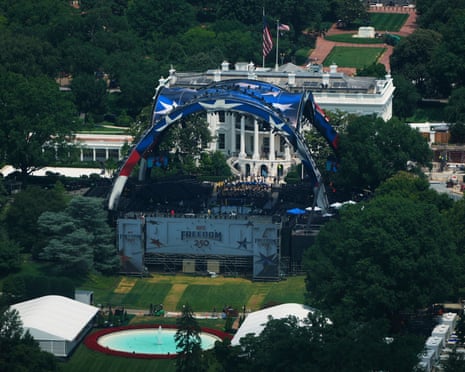
A 92ft-tall skeletal structure, dubbed “the Claw,” now pierces the sky above the South Lawn of the White House. Beneath it, an octagonal cage, flanked by sponsor logos, temporary grandstands, and thousands of seats, hosted a mixed martial arts card on Sunday night. This spectacle, celebrating Donald Trump’s 80th birthday and the Ultimate Fighting Championship (UFC) brand, has not merely raised eyebrows; it has prompted comparisons to Mike Judge’s dystopian satire *Idiocracy* and been dismissed outright as a “kleptocratic spectacle.” The commercial overlay is undeniable, extending even to “Freedom 250” commemorative coins bearing Trump’s likeness, marketed at prices ranging from $250 to a staggering $12,000. The fundamental question, then, is not merely *what* is happening at 1600 Pennsylvania Avenue, but *how* we arrived at such a confluence of political power and corporate entertainment.
The architect of this audacious convergence is Dana White, the UFC chief executive whose ubiquitous presence in the weeks leading up to the event has been impossible to ignore. White, a figure who has long cultivated influence outside conventional power structures, has transformed from a mere fight promoter into a rare commodity: a cultural power broker, a political surrogate, even a Meta board member, and one of Trump’s most trusted advisers. His media tour, featuring appearances on NPR, an interview with David Remnick on the New Yorker Radio Hour podcast, a lengthy feature in Rolling Stone, and a cover story in Time magazine, underscores his elevated status.
### The Blurring of Lines: Politics, Performance, and Profit
This unprecedented White House takeover by a private, for-profit sporting event signals a profound erosion of traditional boundaries. The event itself, held on federal land, exemplifies how politics, entertainment, and corporate branding are becoming indistinguishable. What was once considered the dignified space of presidential authority is now an arena for commercial spectacle, indistinguishable from any other high-profile entertainment venue. The “Freedom 250” coins, ranging from $250 to $12,000, are a stark illustration of direct monetization leveraging a presidential figure and federal property, turning political association into a tiered consumer product.

### Dana White's Unconventional Ascent to Influence
White's journey to this position of influence is rooted in an origin myth central to both his and Trump’s narratives: Trump provided a lifeline to the UFC when it was a fringe spectacle, banned in 36 states and derided by Senator John McCain as “human cockfighting.” In the early 2000s, when both men were at professional low points—the UFC struggling to find venues and Trump navigating post-casino troubles—their interests converged at the Atlantic City boardwalk. Trump’s Taj Mahal casino needed customers, and the UFC needed a platform. This reciprocal relationship forged an enduring loyalty, propelling White into a role far beyond sports executive. His current status as a Meta board member and Trump confidant demonstrates how strategic personal alliances, rather than traditional political pathways, can create formidable power brokers.
### Implications for Public Discourse and Political Aesthetics
The staging of a UFC card at the White House is more than just a peculiar birthday celebration; it is a potent symbol of how political aesthetics are shifting. This event legitimizes a particular brand of hyper-masculine entertainment within the highest echelons of government, simultaneously normalizing the blurring of commercial interests with national institutions. It signals that spectacle can be a primary mode of political engagement, where endorsement deals and brand visibility intertwine with presidential activity. The narrative of Trump's support, framed as a heroic intervention, further solidifies a transactional political culture where personal loyalty and mutual benefit supersede traditional protocols, ultimately reshaping the very notion of what constitutes legitimate public discourse and appropriate presidential conduct.
This unique event highlights a broader trend where celebrity culture and political power feed off each other, creating an echo chamber of mutual validation. For Dana White, it's a testament to the power of a relentless carnival barker who leveraged a personal connection to ascend to unprecedented levels of cultural and political influence, staging a literal takeover of a nation's most symbolic address. For observers, it forces a critical examination of what constitutes an acceptable public sphere, and how easily it can be redefined by the pull of personalities and profits.