Slicing the Software: What Samsung's One UI 8.5 Gatekeeping Signals to Premium Buyers
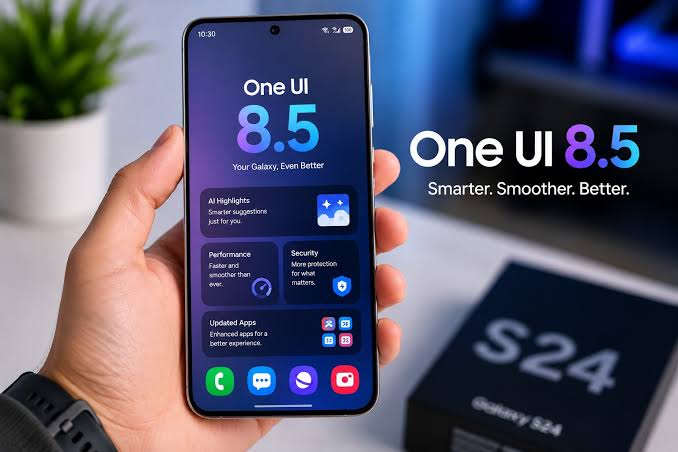
The launch of Samsung’s One UI 8.5 update in May 2026 arrived with the standard corporate promise of elevated Galaxy AI features, camera enhancements, and smarter notifications. Yet, for users holding a Galaxy S25, S24, or older premium devices, the rollout has highlighted a frustrating reality. Several of the most talked-about features showcased on the flagship Galaxy S26 are conspicuously absent from older, yet highly capable, hardware.
While a massive 900MB update on June 11, 2026, attempted to bridge some of the initial gaps for the Galaxy S25 series in South Korea—with rollouts for North America, Europe, and India trailing closely behind—fundamental features remain locked away. This strategic omission raises serious questions about how hardware lifecycles are being artificially shortened through software gatekeeping.
The Arbitrary Wall of Now Nudge

Among the most glaring omissions in the One UI 8.5 update for older devices is 'Now Nudge.' This context-aware AI tool reads on-screen content to surface real-time suggestions within the Samsung Keyboard toolbar, such as automatically offering to create calendar events, save contacts, or share photos. Crucially, the feature requires the native Samsung Keyboard to function, rendering it useless for those preferring Gboard.
As of June 2026, Now Nudge remains exclusive to the Galaxy S26 series. It is entirely missing from the Galaxy S25, S25+, S25 Ultra, Z Fold 7, and Z Flip 7. Industry analysts at Digital Trends have noted that Now Nudge does not appear to rely on any S26-exclusive hardware components. This makes its exclusion from the S25 lineup difficult to justify as a technical limitation, pointing instead to a deliberate commercial decision to keep the S26 distinct.
Though a firmware leak spotted by SamMobile suggests that Now Nudge is present in internal One UI 9 builds for the Galaxy Z Fold 7, Samsung has offered no official explanation or timeline for when—or if—this feature will trickle down to older devices.
The Camera Assistant Ceiling
Software fragmentation is also hitting mobile photography. On the Galaxy S26 Ultra, Samsung introduced a middle-ground 24MP shooting mode that sits between the standard 12MP and the storage-heavy 200MP options. This setting uses AI Fusion processing to capture high-detail images without generating bloated file sizes, and is accessed through the Camera Assistant app.
Yet, despite possessing the raw camera hardware capable of processing high-resolution imagery, owners of the Galaxy S25 Ultra will search the Camera Assistant app in vain. The 24MP option is entirely missing, representing another key selling point that has been artificially cordoned off to preserve the S26 Ultra’s market appeal.

What This Signals for the Premium Smartphone Market
Samsung’s current update strategy demonstrates a shifting paradigm in consumer tech. Historically, older flagships missed out on new features because their chipsets lacked the processing power to run them. Today, with the S25 and Z Fold 7 series boasting immensely capable silicon, the bottleneck is no longer the processor—it is the manufacturer's product segmentation strategy.
By restricting highly anticipated software conveniences like Now Nudge and optimized camera options to its newest models, Samsung is utilizing software-based differentiation to compel upgrades. For consumers who invested heavily in previous-generation flagships under the promise of long-term software support, this selective feature distribution dilutes the actual value of those extended update promises.