Beyond the Cloud: Zoho's Foundational Bet on Homegrown Hardware
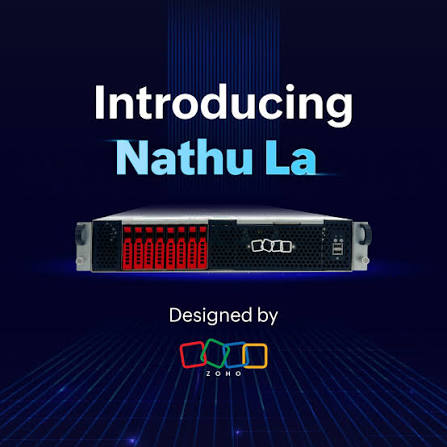
In an era increasingly defined by cloud hyperscalers, Zoho Corporation, parent company of Zoho and ManageEngine, has quietly launched 'Nathu La,' an in-house designed server, signalling a profound strategic pivot towards vertical integration. This move, leveraging Intel® Xeon® 6 processors, aims to redefine efficiency, slashing power consumption by 12-18% and total cost of ownership (TCO) by a substantial 20-30%, significantly reducing inference costs for its AI workloads.
The Nathu La server is not merely another piece of hardware; it embodies a five-year R&D effort across hardware, firmware, and systems management. Developed collaboratively with Intel, the design philosophy draws heavily from the Open Compute Project (OCP), prioritizing modularity, thermal efficiency, and ease of maintenance. This allows Zoho to optimize its data centres for a comprehensive software-hardware stack, promising enhanced performance for virtualisation (VM), High Performance Computing (HPC), AI inference, and storage applications, ultimately improving application performance for global end-users.

Veerakumar Natarajan, Country Head, Zoho Kenya, articulates the strategic imperative: “With our strategy of using contextual, right-sized models, running on our own platform, on our own servers, in our own data centres, we are compounding the benefits accrued from owning and operating our entire technology stack.” This holistic control, he asserts, ensures solutions are more sustainable and accessible for businesses, translating long-term R&D investments into tangible customer value.
This infrastructure play extends beyond mere cost-cutting; it represents a commitment to deep-seated engineering capabilities. Since 2020, Zoho has cultivated a dedicated R&D team in Nagpur, a Tier 2 town in India, specifically for server design and systems engineering projects. A critical component of this talent pipeline is SETU – Student’s Engagement for Transformative Upskilling – an initiative focused on building industry-ready engineers in Electronics System Design and Manufacturing (ESDM). SETU addresses the growing demand for stronger foundational engineering skills amidst AI-assisted development, fostering hands-on innovation and first-principles problem-solving. Over 300 students have been trained through this programme, with some transitioning directly into Zoho’s R&D teams, including those behind Nathu La.
The implications of Zoho's approach are significant. By customising power delivery subsystems and developing an in-house DC-SCM (Data Centre Secure Control Module) design, Zoho is securing granular control over its operational efficiency and data governance. This deliberate shift away from sole reliance on external hardware vendors or generic cloud infrastructure provides a distinct competitive advantage, allowing the company to fine-tune its stack for specific workloads and reduce the unpredictable variables associated with third-party dependencies.
For markets like Kenya, where Zoho maintains a significant presence, this strategy translates into a promise of more accessible and sustainable enterprise solutions. Natarajan's emphasis on "sustainable and accessible for businesses" underscores how efficiency gains at the foundational hardware layer can cascade into more competitive and resilient services at the application level. As global technology trends continue to push for specialized hardware for burgeoning AI demands, Zoho’s investment in homegrown server technology, nurtured by initiatives like SETU, positions it as an outlier willing to build the future from the ground up, rather than merely rent it.