Africa's Electric Ride Shifts Gears: From Venture Gamble to Infrastructure Play
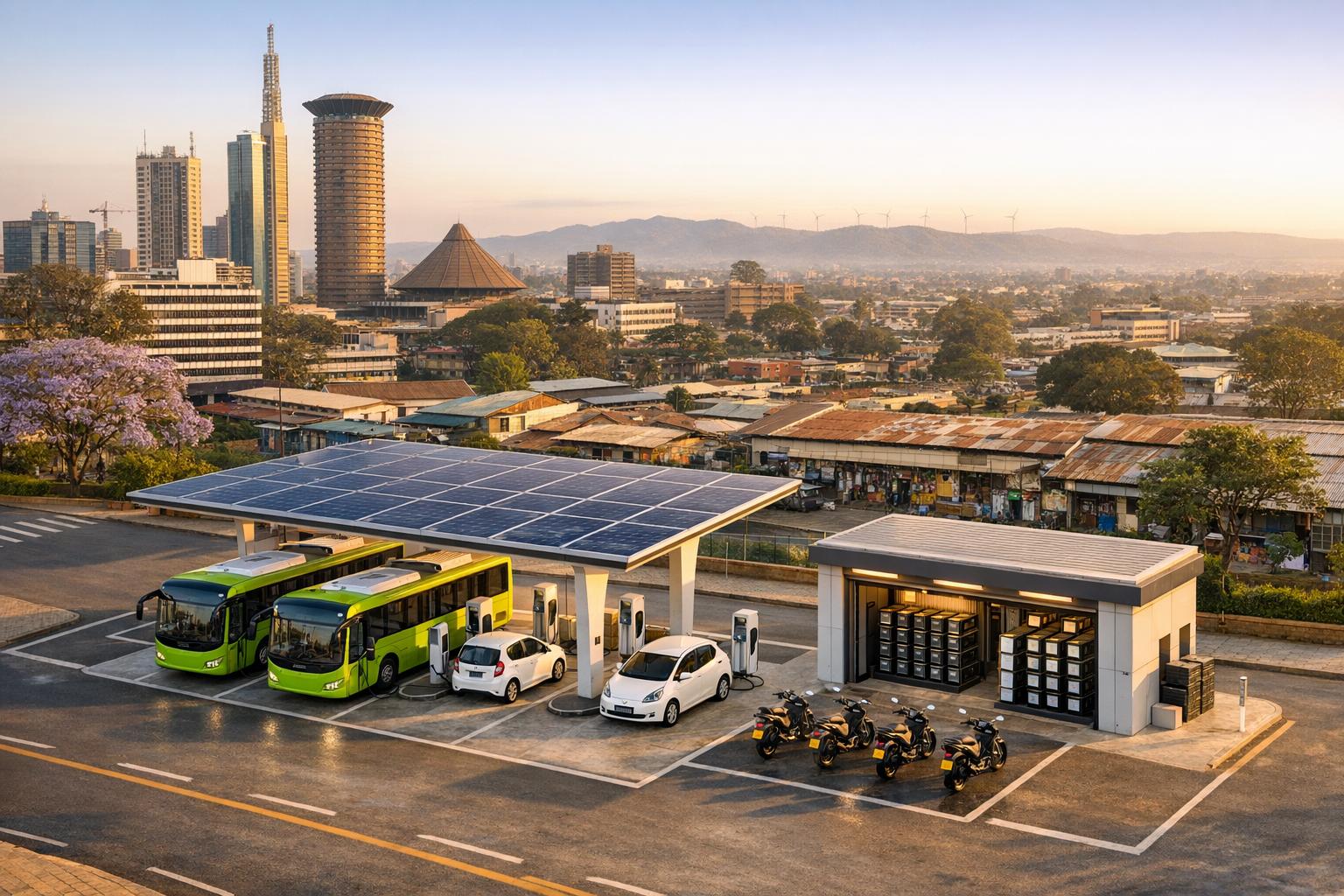
Africa's electric mobility sector has quietly, yet decisively, shed its 'venture bet' label, evolving into an asset class more akin to infrastructure. The latest analysis from TechCabal Insights Deal Tracker reveals a stark re-calibration of investor appetite, with over $1.28 billion poured into the sector across 129 deals between 2019 and early June 2026. This substantial capital marks a significant departure from earlier perceptions of unproven markets, signaling a profound maturation.
### From Speculation to Collateral: The Funding Paradigm Shift
Crucially, a third of this funding, amounting to $437 million, now originates as debt. This financial instrument was conspicuously absent in 2019 but notably overtook equity in 2023. Lenders, as the industry understands, typically enter a sector only once its assets can be collateralised and its receivables predicted. This shift is a powerful validation, indicating that electric mobility assets—from two- and three-wheelers to e-buses and battery-swap networks—are increasingly seen as tangible, predictable revenue generators.
The African Development Bank (AfDB) underscores this maturation. Wale Shonibare, director of energy financial solutions, policy and regulation, states the Bank's approach is evolving, with financing now contingent on three conditions: "scalable, commercially viable business models, predictable revenue streams, and an enabling regulatory environment." To bolster this transition, the AfDB is developing the Green Mobility Facility for Africa (GMFA), a blended finance platform designed to mobilize over $300 million to unlock commercial lending and support pipeline development through guarantees and financial intermediation.

### The Infrastructure Mandate: Debt, Scale, and Predictable Returns
The nature of capital inflow further cements this transition. Since 2021, rounds of $10 million or more have consistently accounted for at least three-quarters of annual funding, indicating a market focused on build-out rather than mere experimentation. This propensity for larger rounds is characteristic of infrastructure development, where substantial upfront capital is required for tangible assets and operational scale.
While annual funding has swung, from $119 million in 2021 to $260 million in 2024, dipping to $180 million in 2025, the first half of 2026 alone recorded $313 million on just ten deals—surpassing all of 2025. It's a record with a clear caveat: Spiro, an electric two-wheeler and battery-swap company, accounted for approximately $272 million of this sum. Nevertheless, this single company's ability to attract such substantial capital reflects the sector's potential for significant scale-ups when viable models align with institutional funding.
### Implications for African Economic Development
The strategic shift in financing electric mobility holds significant implications for broader African economic development. The sector, increasingly financed like infrastructure, creates a blueprint for other capital-intensive industries aiming to transition from venture-dependent models to more robust, institutionally backed growth.
Dieko Ojo, an investment associate at Novastar Ventures, aptly notes that "Mobility financing businesses are debt-intensive by nature." This aligns perfectly with the current trend, where the ability to collateralize assets and project cash flows is paramount. The AfDB's GMFA, by fostering commercial lending and offering guarantees, is not merely funding projects but actively de-risking the sector, paving the way for sustained, long-term investment across the continent. This signals a future where electric mobility isn't just an environmental aspiration but a concrete economic pillar, built on predictable returns and tangible assets, rather than speculative bets.